Страница 87
Женьшень и его братья, Востриков Л.А., Константинов А.А., Фруентов Н.К., 1979
стр. 87
Книга вышла в 1979 году и ещё охраняется авторским правом. Поэтому доступны только номера страниц, библиографическая ссылка и цитаты, которые вошли в атлас.
Востриков Л.А., Константинов А.А., Фруентов Н.К. Женьшень и его братья, 1979. С. 87.Так можно сослаться на эту страницу.
Цитаты с этой страницы, которые вошли в атлас
С этой страницы в атлас вошли 4 растения и 10 цитат.
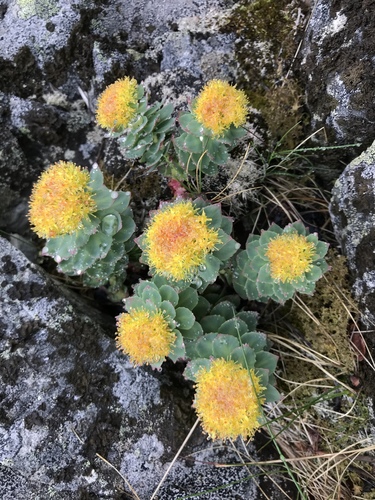 Родиола розоваяRhodiola rosea5 цитат
- применениеуспокаивающее (корневища)For instance, in cases of neurosis a systematic use of the golden root helped patients to sleep better and have better appetite, led to disappearance of unpleasant feelings in the region of the heart and acted as a sedative.
- применениетонизирующее (корневища)At present the roots of Rodiola rosea are used as a tonic and stimulant. The effect of the golden root extract on the central nervous system is also used to treat certain categories of patients with nervous system disorders. ... Its favourable effect on the heart, muscular and mental efficiencies was also registered. These effects are clearly revealed in conditions of fatigue.
- применениекорневищаFavourable results were achieved when the golden root was used to treat arterial hypotension.
- где растётсеверная часть европейской территории СССР, Сибирь, Алтай, Тянь-Шань, Восточная Сибирь, Дальний Восток, Западная Европа, Малая Азия, Монголия, Китай (равнинные, горные тундры, скалистые, каменистые склоны, влажная почва вдоль берегов горных рек, ручьев, трещины скал, гальки)Rodiola rosea L. grows in the flat country and mountainous tundras of the northern European part of the USSR and in Siberia, in the mountains of the Altai, where it forms large thickets, on the Tien Shan mountains, in Eastern Siberia and the Far East, and outside of the USSR—in the mountains of Western Europe, Asia Minor, in Mongolia and China. It grows on the rocky and metallic slopes, on the damp soil along the banks of mountain rivers and brooks, in the cracks of rocks and shingles.
- упоминаниев книге названо «Родиола розовая»On the other hand there are plants that do not belong to the Araliaceae family but, nonetheless, affect the organism approximately in the same way as do Ginseng and Eleutherococcus. One such plant is Rodiola rosea L., belonging to the family of Crassulaceae. This is a perennial thick herb with a large tuberiform uneven rhizome and a thick straight root, the upper part of which is covered with scaly membranous leaves of triangular form pointed at the top. On the scraped off bark there is a lemon-yellow layer of cork. It emits an odour reminiscent of an aroma of a rose. The stems are not numerous (two to four), they stand straight, are not branchy, 25 to 30 centimetres high. The leaves are recurrent, dense, sessile, elliptical or oblong shaped, diverging-digitated at the top and with a few teeth. Its flowers are yellow, gathered in a thick corymb on top of the stems. It blossoms in June and the first half of July.
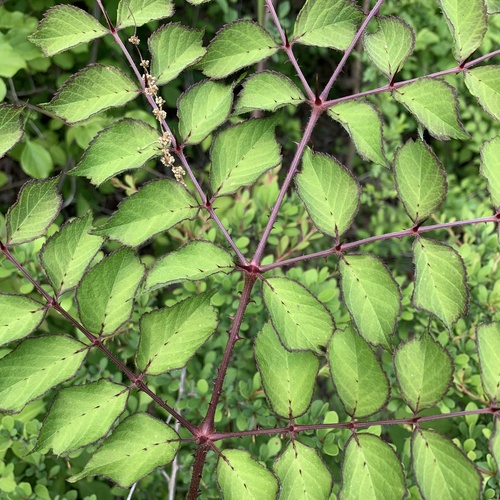 Аралия манчжурскаяAralia elata2 цитаты
- применениетонизирующееThe complex of aralosides intensifies the oxidation-reduction (redox) processes occurring in tissues, raises the resistibility of the organism to unfavourable effects (that is, it exerts an adaptogenous effect).
- применениетонизирующее (корни)Aralia mandshurica root preparations found application in treating neurologic diseases, in particular, functional disorders of the nervous system. They lessen excitability and, to a certain degree—irritability. They also exert clear-cut stimulating and tonic effects.
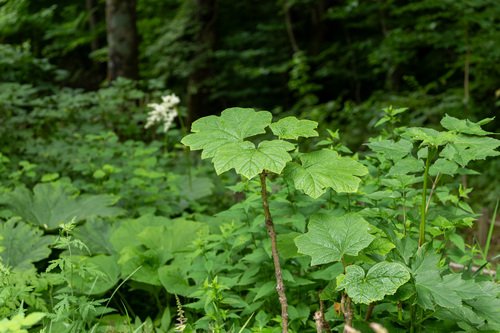 Заманиха высокаяOplopanax elatus2 цитаты
- применениетонизирующееIn particular, they have an adaptogenous effect and can be used as an auxiliary remedy in the first stages of diabetes mellitus.
- применениестимулирующее (корневища)Echinopanax drugs are recommended as remedies for stimulating the central nervous system. For patients with neurologic disorders they help to lessen fatiguability and erethism; patients begin to sleep better. Certain other positive effects are also characteristic of them.
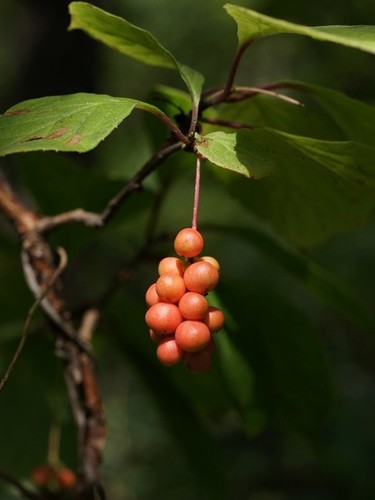 Лимонник китайскийSchisandra chinensis1 цитата
- где растётДальний Восток СССР (горные районы Приморья, Приамурья, побережье Охотского моря, Камчатка, Сахалин, Курильские острова)In the Far East it can be found in the mountainous regions of Primorye and Priamurye, on the Okhotsk Sea coast, Kamchatka, Sakhalin and Kuril Islands.
Это история применения растений по книге 1979 года, а не медицинский совет.